

WEST PALM BEACH, FL · WATER LEAK DETECTION
Find the hidden water leak, whatever kind it turns out to be.
Water leak detection in West Palm Beach usually starts with one of a few telltale signs. A water bill that jumped for no reason. A sound of running water when everything’s off. A soft spot in the yard, a warm patch on the tile, a pool that’s dropping faster than it should. Most people who call us don’t know yet which kind of leak they have — they just know something’s wrong. That’s fine. Figuring out where it’s hiding is our job, not yours.
✓ Licensed & insured technicians ✓ 60-day guarantee on findings ✓ Serving 33401 · 33405 · 33407
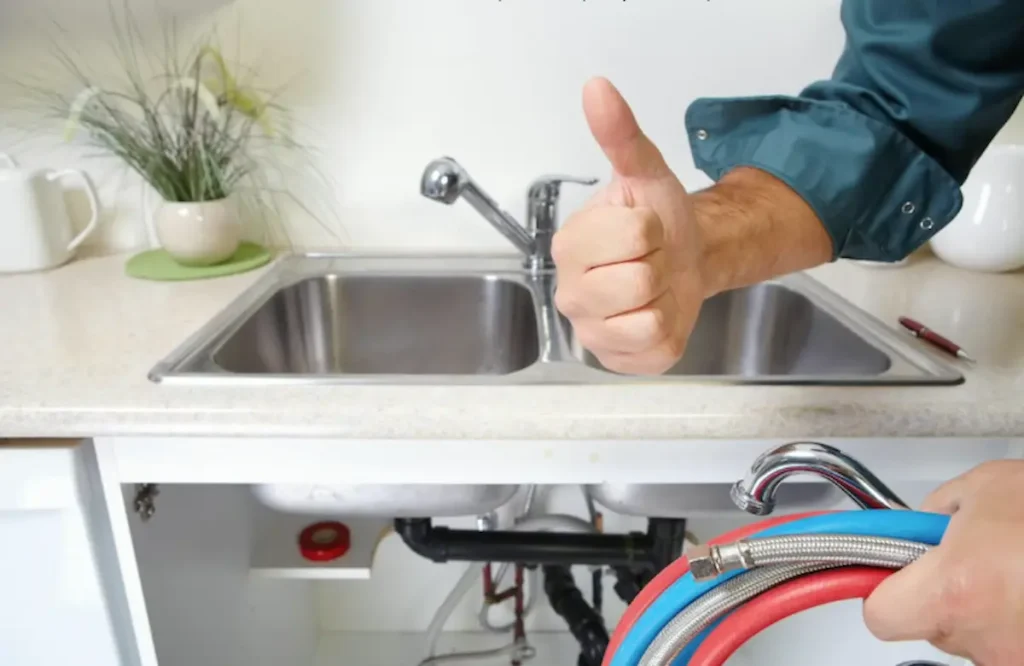
The four places a hidden leak usually hides
Every leak we get called about falls into one of four categories. Knowing which one you’re dealing with changes the equipment we bring and how long the visit takes.
| Where it’s hiding | What usually gives it away | What we use |
|---|---|---|
| Under the slab | Warm spot on tile, rising bill, no visible water | Acoustic listening, thermal imaging |
| Underground, in the yard | Soggy patch, low pressure, meter still spinning | Acoustic listening, ground microphone |
| Inside walls or under sinks | Dripping sound, cabinet moisture, musty smell | Pressure isolation, acoustic detection |
| Pool shell or plumbing | Water loss beyond normal evaporation | Pressure and dye testing, electronic detection |
Not sure which row fits? Call and describe what you’re seeing — most of the time we can narrow it to one or two possibilities before we even schedule the visit.
How Water Leak Detection Works
No leak detection method works for every situation, which is exactly why the companies that rely on just one tend to miss more than they find. We carry five, and we choose the combination based on what you’re describing and what the first test tells us.
- Pressure & meter testing — the first move on almost every call. Isolating sections of the plumbing by pressure alone rules out entire parts of the house in minutes, before any specialized equipment comes out.
- Acoustic listening — a sensitive microphone tuned to the specific sound of pressurized water escaping a pipe, effective under slabs, underground, and inside walls.
- Thermal imaging — reads the temperature signature a hot-water leak leaves on the surface above it. Excellent for hot-line slab leaks, less useful on its own for cold lines.
- Electronic detection — traces a low-voltage signal through pool water or a liner to find the exact point it’s escaping through a breach in the shell.
- Camera inspection — a waterproof scope for sewer and drain lines, where sound and heat alone won’t tell you enough about the pipe’s condition.
Most jobs need two of these, not one — that’s the difference between a confirmed location and an educated guess. A professional leak survey combines these methods to pinpoint hidden leaks.
Why West Palm Beach homes see more leaks than most
This isn’t a generic problem with a generic cause here. Water leak detection in West Palm Beach is more common than in most cities, because four things stack up against pipes in this specific part of Florida:
- The ground itself. Sandy, porous soil sitting over the Biscayne Aquifer shifts with every heavy rain, and most homes here are slab-on-grade — the pipe underneath doesn’t get to move with it.
- Pipe age and material. Cast iron typically lasts 25–50 years nationally; in South Florida’s soil and climate, that lifespan is often cut roughly in half. A lot of homes in El Cid, Old Northwood, Flamingo Park, and Grandview Heights are still running on original copper from the 1970s–90s.
- The water itself. City water pulled from the aquifer is lime-softened but still moderately hard, which accelerates internal corrosion over the decades.
- A long, heavy wet season. June through November, rising groundwater pushes harder on pipes that are already under strain.
What Water Leak Detection Costs in West Palm Beach
Pricing depends on which of the four categories above you are in — a single accessible fixture leak and a deep, hard-to-locate slab leak are not priced the same way. As a starting point: Our leak detection cost guide breaks down what moves the price.
- Minor, accessible leaks (a fixture, a shallow line, a single suspected source) are usually resolved within 1–2 hours of testing, at the lower end of our range, often with same-day availability.
- Major or hard-to-locate leaks (deep slab leaks, multiple suspected sources, larger properties) take more equipment time and are priced accordingly — but you’ll always get an exact number before any work starts, and a portion of the detection fee applies toward repair if you move forward with us.
Choosing a Leak Detection Team You Can Trust
Not every company you find when you search for leak detection near you uses the same equipment or the same standard of proof. Some crews guess and start cutting; others test methodically until the source is confirmed before anything gets opened up. That difference matters, because a wrong guess means a second hole in your wall or a second afternoon of your day.
When you are comparing quotes for water leak detection, ask three questions: what equipment will actually be used, whether you get a written and dated findings report, and whether the same visit can move into repair if the leak turns out to be simple. A team that answers all three clearly is usually one that does this daily rather than occasionally. Our guide to choosing a leak detection company in West Palm Beach lists nine questions worth asking.
West Palm Beach’s mix of slab foundations, sandy soil, and older cast iron plumbing means local experience is not a nice-to-have — it is the difference between finding a leak in an hour and spending a whole day guessing. Our technicians handle water leak detection across West Palm Beach neighborhoods every week, so the patterns behind a slab leak, a pool shell leak, or a supply-line leak are usually familiar before we even arrive.
- Written, dated findings report included with every visit
- Non-invasive testing methods tried first, every time
- Same appointment can move straight into repair scheduling
- Local experience with West Palm Beach soil, slab, and pipe conditions
Preventing the Need for Repeat Water Leak Detection Visits
Good leak detection does more than find today’s problem — it should leave you with a clear picture of whether more leaks are likely soon. Pipe material, home age, and soil movement all play a role, and a technician who has done hundreds of these calls can usually tell you which of those factors is working against your specific house.
Between visits, there is a lot a homeowner can watch for without any special equipment. A water bill that creeps up month over month, even slightly, is worth tracking rather than dismissing. So is a water meter that keeps turning after every fixture in the house is off — that single test alone catches a surprising number of hidden leaks before they become expensive.
For pool owners, a monthly bucket test — comparing water loss in the pool against a bucket sitting on the steps — gives a rough baseline for normal evaporation. When the pool consistently loses more than the bucket does, that gap is exactly the kind of signal that leads a homeowner to call while a technician can still act on it quickly, before a small shell crack becomes a larger repair.
Homes built before the 1990s in this area are more likely to have cast iron or galvanized supply lines, both of which corrode from the inside in ways you cannot see from outside the pipe. If your home falls into that category, a proactive water leak detection check every couple of years — even without obvious symptoms — tends to be cheaper than waiting for a slab leak to announce itself through the flooring.
None of this replaces a professional visit when something is clearly wrong, but knowing what to watch for means you call earlier, when the fix is smaller and the visit itself is quicker and less disruptive to your home.
Leak detection near you across Palm Beach County
We are based in West Palm Beach and work throughout the surrounding area, including Palm Beach, Riviera Beach, Lake Worth Beach, Royal Palm Beach, Palm Springs and Greenacres. Not sure whether we cover your address? Call and tell us where you are, and we will tell you plainly.
COMMON QUESTIONS
Frequently asked questions
How do I know if I even have a hidden leak?
If you are watching for signs of a leak, the most common giveaway is a water bill that jumps with no change in how you’re using water. Other signs: the meter still spinning with every fixture off, a warm or damp spot on the floor, a musty smell with no visible source, or a pool that’s losing more than about a quarter-inch a day. Any one of these on its own is worth a call — a few together usually means it’s time to test.
What’s the actual difference between a slab leak and an underground leak?
A slab leak is under your foundation, inside the footprint of the house. An underground leak is in the yard — typically the supply line between the water meter and the house, or an irrigation line. They’re diagnosed differently and often sound different acoustically, which is part of why an accurate first test matters more than guessing.
Is leak detection covered by homeowners insurance?
Often, yes, for the sudden and accidental water damage a leak causes — though coverage for the detection visit itself and for the leaking pipe varies by policy. Our reports are dated and detailed, so you can hand them directly to your adjuster, and we’re glad to talk through what we’re seeing with them if a claim is involved. The EPA WaterSense program also has good background on how much a hidden leak can waste before it is found.
How fast can someone come out?
Same-day appointments are common, and we prioritize active leaks you can’t shut off. Call and describe what you’re seeing — we’ll give you a realistic window rather than a vague “sometime today.”
Will you have to cut into my floor or dig up my yard to find it?
Almost never just to locate it — that is the whole point of professional leak detection. Every visit starts with non-invasive testing — pressure, acoustic, thermal, or electronic, depending on the leak type. If repair requires opening something up, we mark the exact spot first, so it’s one small, correctly-placed opening instead of several exploratory ones.
Explore leak detection by type
Not sure where to start? Call and describe it.
Call +1 (728) 224-6444 and we’ll walk you through what’s likely happening before we ever schedule a visit.