

WEST PALM BEACH, FL · EMERGENCY LEAK DETECTION
Emergency Leak Detection in West Palm Beach
Water where it shouldn’t be, a meter that won’t stop spinning, a wall that’s suddenly wet — when a leak turns urgent, you don’t have time to guess. We offer 24/7 leak detection services for homeowners across West Palm Beach who need the source found fast, without tearing into walls or floors to look for it.
✓ Licensed & insured ✓ Non-invasive detection ✓ Local West Palm Beach team ✓ Upfront pricing before work begins
EMERGENCY SYMPTOMS
What counts as an emergency leak?
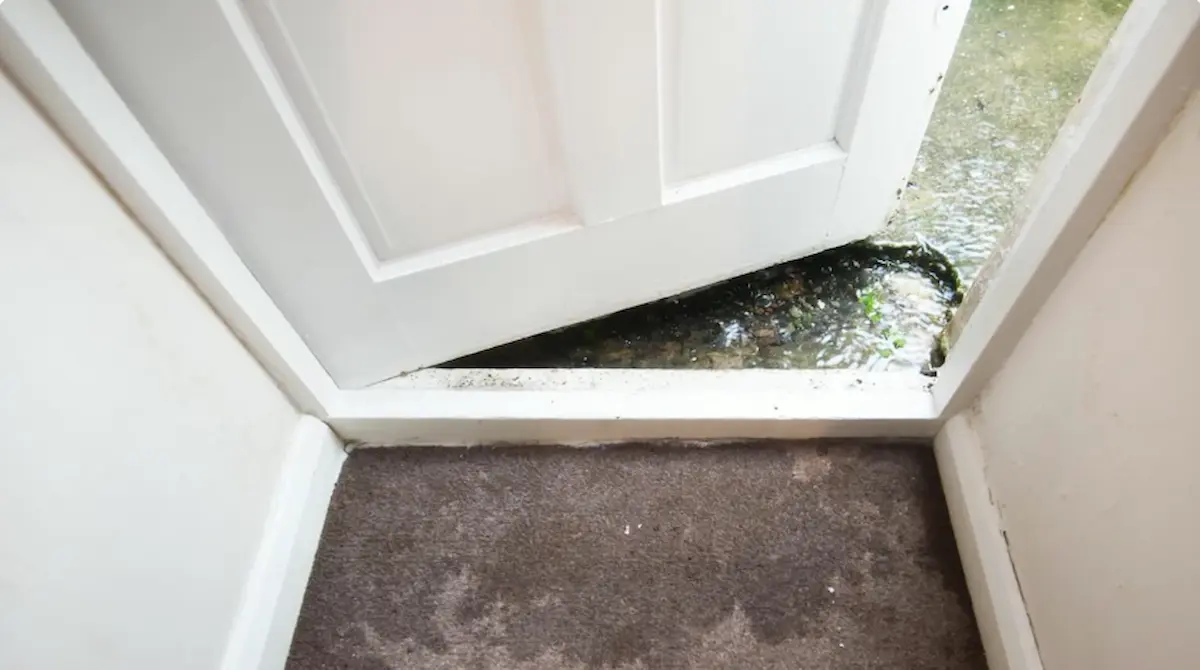
Not every leak needs a same-day visit, but some do. A leak is generally an emergency when it’s active and getting worse, when it’s affecting an area you can’t safely ignore — electrical, structural, or a shared wall with a neighbor — or when you can’t find a way to stop it yourself. Treat it as urgent if you’re seeing any of the following:
- Water actively running or pooling that you can’t stop
- The water meter is spinning with every fixture in the house turned off
- A sudden, unexplained jump in water usage
- Water coming through a ceiling, wall, or light fixture
- A wet or spongy spot on flooring that’s spreading
- A suspected slab leak with rising heat or moisture on the tile
- Water pooling near an electrical panel, outlet, or appliance
- A shutoff valve that’s stuck, broken, or won’t fully stop the flow
If what you’re seeing is a slow drip, a small stain that isn’t growing, or higher-than-usual (but not extreme) water use, it’s still worth investigating — just not necessarily tonight. Our Water Leak Detection page walks through how to tell what kind of hidden leak you might have.
What should I do if my water meter is running with everything turned off?
That’s one of the clearest signs of a hidden leak somewhere in the system. Note the reading, wait 15–20 minutes without using any water, and check it again. If it moved, water is escaping somewhere between the meter and your fixtures — underground, under the slab, or inside a wall — and it’s worth a call.
BEFORE WE ARRIVE
What to do before we arrive
Should I shut off my home’s main water supply?
If water is actively flowing and you can’t stop it at the fixture, shutting off the main supply is usually the right move — it stops the damage from getting worse while you wait for a technician. If the leak is minor, isolated to one fixture, and you can shut off just that line (like the valve under a sink or toilet), you don’t need to kill water to the whole house.
What should I do before the leak detection technician arrives?
- Shut off the main water valve if the leak is active and you can’t stop it another way
- Avoid walking through standing water near outlets, switches, or appliances — treat that as an electrical hazard, not just a wet floor
- Don’t cut into drywall, flooring, or ceilings trying to find the source yourself — it often makes the leak harder (and more expensive) to pinpoint
- Move furniture, electronics, or belongings away from the affected area if it’s safe to do so
- Take a few photos or a short video for your records, especially if you plan to file an insurance claim
- If the water is near your electrical panel or any wiring, stay clear and treat it as unsafe until a professional has looked at it
We’re not able to walk you through electrical safety over the phone — if there’s any doubt about power and water mixing, wait outside the area until it’s been checked.
HIDDEN SOURCES
Why some emergency leaks are hidden
Visible water doesn’t always mean the leak is where the water shows up. A wet ceiling can trace back to a pipe several feet away; a wet spot on the slab can come from a supply line running under a completely different room. That’s why cutting into the first wet area you find is often the wrong move — it treats the symptom, not the source.
This is where non-invasive detection matters most in an emergency: acoustic listening equipment and thermal imaging let us trace the leak back to its actual origin, often in the same visit, without opening up more of your home than necessary.
Can a hidden leak cause serious damage?
Yes — a hidden leak that’s been running for even a short time can saturate drywall, subfloor, and framing, and in an emergency situation (an active or worsening leak) that damage compounds by the hour. That’s the main reason emergency leaks get prioritized over routine ones.
Can you detect a leak without breaking the floor?
In almost every case, yes. Pressure testing and a meter check narrow down which section of the plumbing is affected within minutes. From there, acoustic and thermal equipment pinpoint the exact location, so the only opening needed is the one for the actual repair.
THE PROCESS
Emergency leak detection process
When a leak is active or urgent, the process moves the same way every time — just faster and with a clear priority order:
- Initial assessment — a quick phone conversation about what you’re seeing, so we know what to bring and whether shutting off water makes sense before we arrive
- Water isolation / meter check — confirming whether water is actively moving through the system and roughly how much
- Pressure testing — isolating which section of plumbing (or which line) is losing pressure
- Acoustic detection — listening equipment traces the sound of the leak to a specific area
- Thermal imaging — where useful, thermal cameras pick up temperature differences from water moving where it shouldn’t be
- Moisture investigation — checking flooring, drywall, and surrounding materials for how far the water has traveled
- Pinpointing the source — narrowing the previous steps down to the exact leak location
- Marking and documenting — the spot is marked, and findings are photographed for your records or an insurance claim
- Explaining repair options — you get a clear explanation of what was found and what it takes to fix it, with a real number before any work starts
EMERGENCY LEAK TYPES
Types of emergency leaks we handle
Emergency calls usually fall into one of these categories. Each has its own dedicated page if you want the full detail — here’s the short version:
- Slab leaks — a leak under the concrete foundation, often showing up as a warm spot on tile or a rising water bill. See Slab Leak Detection.
- Underground / main line leaks — a break in the line between the meter and your house, often showing up as a soft or soggy spot in the yard. See Underground Leak Detection.
- Burst or failed supply lines — a sudden, fast leak from a pipe, valve, or fitting behind a wall or under a fixture. See Pipe Leak Detection.
- Wall or ceiling leaks — water traveling from its source to show up somewhere else entirely, which is why tracing (not guessing) matters.
- Pool and spa leaks — a pool losing water faster than evaporation accounts for. Rarely a flood-level emergency, but worth same-day attention if the loss is significant. See Pool Leak Detection.
- Leaks near electrical systems — any leak affecting an outlet, panel, or wired appliance should be treated as an emergency regardless of how much water is involved, because of the safety risk, not just the water damage.
LOCAL CONTEXT
Why local context matters in an emergency
West Palm Beach’s mix of older single-family homes, condos, and townhomes means the likely cause of an emergency leak changes by property type. A lot of homes still run original 1970s–90s copper plumbing under a concrete slab, which is a common source of sudden slab leaks. Condos and townhomes more often deal with shared or stacked plumbing, where a leak on one level can show up as a ceiling emergency on another. Older properties with aging supply lines are also more prone to a sudden pipe failure than newer construction. Sandy soil and a long wet season add extra pressure on underground lines throughout neighborhoods like El Cid, Old Northwood, Flamingo Park, and Grandview Heights — all areas our local team already works in regularly.
COMMON QUESTIONS
Frequently asked questions
What is considered a leak detection emergency?
An emergency is a leak that’s active and getting worse, affecting an area you can’t safely ignore (like near electrical equipment or a shared wall), or one you have no way to stop yourself. A slow, stable drip is worth investigating but usually isn’t an emergency.
How do I know if I have an emergency water leak?
Look for water that’s actively moving or spreading, a water meter that keeps spinning with everything off, a sudden spike in usage, or water reaching areas like ceilings, walls, or electrical fixtures. Any of these on their own is worth an urgent call.
What should I do if my water meter is running with everything turned off?
Confirm it by checking the meter again after 15–20 minutes with no water use in the house. If it’s still moving, water is escaping somewhere in the system and it’s time to call.
Should I shut off my home’s main water supply?
If the leak is active and you can’t stop it another way, yes — shutting off the main valve limits further damage while you wait. If it’s isolated to one fixture with its own shutoff valve, you may only need to close that one.
Can a hidden leak cause serious damage?
Yes. A hidden leak can saturate drywall, subfloor, and framing quickly, and in an active emergency that damage gets worse by the hour, which is why fast investigation matters.
Can you detect a leak without breaking the floor?
In almost every case, yes. Pressure testing, acoustic listening, and thermal imaging locate the source first, so only the actual repair spot needs to be opened.
How quickly should an emergency leak be investigated?
As soon as possible once you’ve confirmed it’s active or worsening. We offer 24/7 leak detection services for exactly this reason — the sooner the source is found, the less damage accumulates.
What happens during emergency leak detection?
It follows the same core process as any leak investigation — assessment, meter/pressure check, acoustic and thermal detection, and pinpointing the source — just prioritized and scheduled faster because of the urgency.
Can a slab leak become an emergency?
Yes, especially if it’s been running for a while — rising heat or moisture on the tile, a fast-climbing water bill, or standing water near the slab edge are signs it needs urgent attention rather than routine scheduling. See Slab Leak Detection for the full diagnostic process.
How do I know where the leak is coming from?
Visible water doesn’t always mark the source — it can travel along framing, pipes, or flooring before it shows up somewhere else. Acoustic and thermal equipment trace it back to the actual origin instead of guessing from where the water appears.
What should I do before the leak detection technician arrives?
Shut off the main water supply if you can’t stop an active leak another way, stay away from standing water near outlets or panels, avoid cutting into walls or floors yourself, and take a few photos for your records if you plan to file an insurance claim.
Have an active leak right now?
Don’t wait for it to get worse. Call us directly and describe what you’re seeing, or request emergency service below and we’ll get back to you as quickly as we can.