

WEST PALM BEACH, FL · SLAB LEAK DETECTION
Find the slab leak without tearing up your floor.
Slab leak detection West Palm Beach homeowners rely on starts the moment you notice a warm spot on the tile, a water bill that jumped for no reason, or the sound of running water when every faucet is off — all common signs of a slab leak, and one of the most common calls we get.
✓ Licensed & insured technicians ✓ 60-day guarantee on findings ✓ Serving 33401 · 33405 · 33407
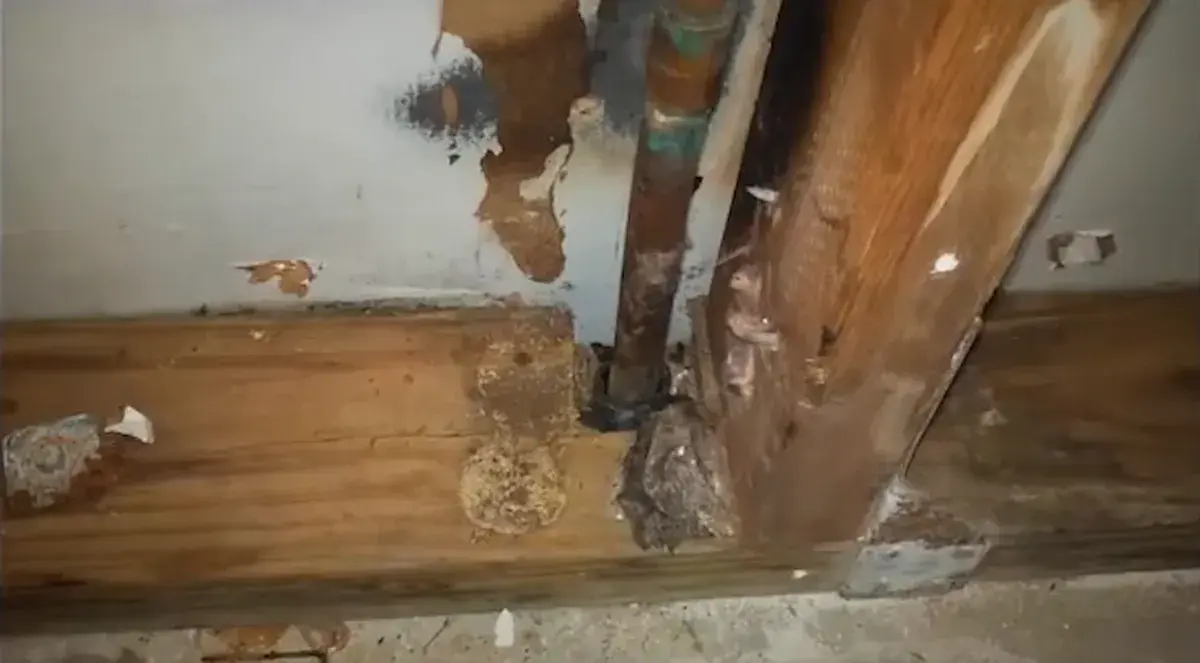
THE DIAGNOSIS
How we know before we ever touch the floor
We don’t guess and we don’t start cutting concrete to “take a look.” Every slab leak call starts with a pressure test and a meter check, which alone rules out entire sections of the house in minutes.
Pressure & meter test
Rules out entire sections of the house in minutes, before any specialized equipment comes out.
Acoustic listening
Isolates the sound of pressurized water escaping the pipe itself, often to within a couple of feet.
Thermal imaging
Spots the temperature difference a hot-water line leaves behind under tile or slab.
LOCAL FACTORS
Why West Palm Beach slabs leak more than most
- SOIL — Sandy, porous ground over the Biscayne Aquifer shifts with every heavy rain, and a slab-on-grade foundation doesn’t give the pipe underneath much room to move with it.
- AGE — In neighborhoods like El Cid, Old Northwood, Flamingo Park, and Grandview Heights, a lot of homes still run on original copper supply lines from the 1970s–90s.
- WATER — City water pulled from the aquifer is lime-softened but still moderately hard, which accelerates internal corrosion over the decades.
- CLIMATE — From June through November, rising groundwater pushes harder on pipes already under strain.
THE VISIT
What happens during your visit
No surprises, no guesswork sold as certainty.
01
You describe it
A high bill, a sound, a warm spot — it tells us where to start.
02
We test first
Pressure testing and a meter check often rule out whole sections in minutes.
03
We narrow it down
Acoustic sensors and thermal imaging isolate the exact area.
04
We mark and show you
You see it, not just hear about it.
05
We quote a real number
Before any cutting or repair work begins.
REAL NUMBERS
What slab leak detection and repair costs
We’d rather tell you a range than make you call to find out. Not always urgent, but not something to sit on either — standing water, an unexplained spike, or new cracked flooring is worth a same-day call.
MINOR / ACCESSIBLE LEAK
A single, accessible line
- Usually resolved within 1–2 hours of testing
- Lower end of our pricing range
- Often same-day availability
MAJOR / HARD-TO-LOCATE
Deep or multiple suspected sources
- More equipment time, priced accordingly
- Portion of detection fee applied to repair if you proceed with us
- Exact price given before any work starts
See the full West Palm Beach leak detection cost guide for ranges across every leak type.
SLAB LEAK BASICS
What Is a Slab Leak?
A slab leak is a leak in one of the water or drain lines that run underneath a home’s concrete foundation. Most houses built on a slab route hot-water, cold-water, or sometimes drain lines directly beneath or through the concrete, so when one of those pipes develops a crack, pinhole, or joint failure, the water has nowhere to go but into the soil, gravel base, or slab itself. Because the pipe is hidden from view, a slab leak is usually noticed indirectly — through its effects — rather than seen directly, which is exactly why slab leak detection West Palm Beach professionals rely on acoustic and thermal tools instead of guesswork.
Common Signs of a Slab Leak
Slab leaks rarely announce themselves clearly. Instead, homeowners usually notice a combination of smaller clues, including:
- An unexplained increase in your water bill from one month to the next
- A water meter that keeps moving even when every fixture and appliance is off
- Hearing running water inside walls or floors when nothing is turned on
- Warm or hot spots on tile or flooring, especially in one concentrated area
- Damp carpet, baseboards, or flooring, or a musty smell with no obvious source
- New or spreading cracks in flooring, tile grout, or nearby drywall
- A noticeable drop in water pressure at one or more fixtures
One sign on its own isn’t always cause for alarm, but two or three showing up together is a strong reason to have the situation looked at. For a broader rundown of leak symptoms across the whole house, our common leak problems page covers signs that point to other types of leaks as well.
A Simple Water Meter Test You Can Do Yourself
Before calling anyone, you can get a useful data point on your own. Turn off every fixture and appliance that uses water, then find your water meter and note the reading. Wait one to two hours without using any water, then check the meter again. If it has moved, water is flowing somewhere in the system — which points toward a hidden leak, though not necessarily one under the slab specifically. If the numbers are unclear, slab leak vs underground leak explains how to tell which one you have.
Hot-Water vs. Cold-Water Slab Leaks
Not all slab leaks behave the same way. A hot-water line leak often shows up faster and more obviously, since heated water escaping into the slab tends to create a warm or even hot patch of flooring that’s easy to feel underfoot. A cold-water line leak is quieter — it may only appear as a rising water bill, a moving meter, or gradual dampness, without any temperature change to give it away. Both can cause the same underlying damage over time, but cold-water leaks are frequently caught later simply because there’s no warm spot prompting someone to investigate.
CAUSES & RISK
What Causes Slab Leaks
Beyond the soil, age, and water-hardness factors already common in West Palm Beach homes, slab leaks are typically traced back to a handful of underlying issues: internal corrosion in older copper pipe, abrasion where a pipe rubs against gravel, rebar, or another pipe as the ground shifts slightly over the years, unusually high static water pressure that stresses joints and fittings, a small defect or damaged section from the original construction, and electrolysis-related corrosion where copper pipe reacts with certain soil conditions or dissimilar metals. Often it’s a combination of two or more of these working together over a long period rather than a single obvious cause.
Where Slab Leaks Commonly Occur
Slab leaks tend to cluster in a few predictable areas: along the main supply line path between the water meter and the house, under kitchens and bathrooms where multiple supply lines converge, near the water heater where hot-water lines originate, and at pipe bends or transition fittings, which are more prone to stress than a straight run of pipe. If you’re already comparing notes with our general water leak detection page, slab leaks are simply the subset of hidden leaks that happen to sit beneath the foundation rather than inside a wall or under a fixture — see our pipe leak detection page if your symptoms point to a wall, sink, or supply line instead.
What Happens If a Slab Leak Goes Undetected
Left alone, a slab leak generally gets worse rather than better. Continuous moisture under the foundation can gradually erode supporting soil, contribute to slab or flooring cracks, and create the damp conditions mold needs to grow beneath carpet or flooring materials. On top of the structural concerns, a running leak keeps adding to your water bill every single day it goes unaddressed. This is why an unexplained bill spike or a moving meter is worth acting on promptly rather than waiting to see if it resolves on its own. The EPA WaterSense program notes that household leaks can waste thousands of gallons a year, which is exactly why prompt slab leak detection matters.
A CLOSER LOOK
How Professional Slab Leak Detection West Palm Beach Works
Beyond the pressure test, acoustic listening, and thermal imaging summarized above, a full slab leak inspection generally combines several techniques to narrow the search area before anything is marked or opened up.
Plumbing Line Tracing
A pipe locator or tone generator sends a signal through the plumbing that a receiver can follow above ground, allowing the technician to map the actual route of the supply lines under the slab rather than relying on the original blueprints, which don’t always match what was actually installed.
Pressure Testing
Isolating sections of the plumbing system and testing each one under pressure is usually the fastest way to confirm which line is losing water and rule out sections that are holding pressure fine.
Acoustic and Electronic Detection
Specialized listening equipment picks up the distinct sound of pressurized water escaping a pipe, and comparing sound intensity at different points along the suspected line helps pinpoint the leak’s location, often within a couple of feet. Our electronic leak detection page goes into more detail on how this equipment works.
Thermal Imaging: When It Helps
A thermal camera is most useful on hot-water line leaks, since it can visualize the temperature difference the escaping hot water leaves behind under tile or slab. It’s less conclusive on cold-water leaks, which is why it’s typically used alongside acoustic testing rather than on its own. More detail is available on our thermal leak detection page.
Narrowing Down the Exact Location
No single method is treated as final on its own. Line tracing shows where the pipe runs, pressure testing confirms which section is affected, and acoustic or thermal readings cross-check each other before a location is marked. Combining methods this way is what allows the leak to be pinpointed within a small, specific area instead of a broad guess.
Does Slab Leak Detection Require Breaking Concrete?
No — detection itself is non-invasive. The entire point of pressure testing, acoustic listening, and thermal imaging is to identify the leak’s location before any concrete is touched. Only once the location is confirmed and you decide to move forward with repair does any opening in the slab happen, and at that point it’s typically a small, targeted access point rather than a large section of flooring.
Slab Leak Detection vs. Slab Leak Repair
These are two distinct steps. Detection is the diagnostic process of finding exactly where a leak is located without unnecessary guesswork or demolition. Repair is the separate work of actually fixing it — which might mean a spot repair at the access point, rerouting the line above the slab, or another approach depending on the pipe’s condition and location. Knowing the precise location first is what allows a repair to be targeted instead of exploratory.
BEFORE YOU CALL
What Can Affect Slab Leak Detection Cost
Beyond the minor-versus-major distinction covered below, a few specifics tend to move the price within that range: how many suspected lines need to be tested, how accessible the affected area is, the overall size of the home, and whether more than one leak is suspected. Equipment and technician time scale with these factors, which is why every job gets a specific number after testing rather than a flat quote up front.
How to Prepare for a Slab Leak Inspection
- Know the location of your main water shutoff valve
- Clear access to your water heater, water meter, and any area showing warmth, dampness, or cracking
- Note when you first noticed the sign and whether it’s gotten better, worse, or stayed the same
- Have a recent water bill or two on hand if a spike is part of what prompted the call
- Avoid unnecessary water use in the hour or two before your appointment so testing isn’t affected
When You Should Call a Professional
If you notice two or more of the signs above together, your own meter test shows movement with everything off, or a bill spike doesn’t line up with any change in household water use, it’s worth scheduling slab leak detection West Palm Beach professionals can act on rather than waiting. Slab leaks don’t tend to resolve on their own, and the sooner the source is confirmed, the smaller the eventual repair usually is. See our process page for what to expect from the first call through to a confirmed location, and if the property in question is a rental, office, or other business space rather than a home, our commercial leak detection page covers what’s different about that setting.
COMMON QUESTIONS
Frequently asked questions
How do I know if it’s a slab leak and not just an old pipe under a sink?
If you can see the pipe and it’s visibly wet, that’s usually a simple fixture repair a plumber can handle directly. A slab leak is hidden — under the floor, inside a wall, or beneath the foundation — and that’s exactly what acoustic and thermal equipment is built to find without guesswork. If the wet spot is out in the yard instead of inside the house, it’s more likely an underground leak than a slab leak — the diagnosis and the dig are different.
Will you have to cut into my floor to find it?
In almost every case, no. Our equipment locates the leak without opening the slab. If repair access is eventually needed, we mark the smallest area possible so the opening — and the cost to patch it — stays minimal.
Is slab leak detection covered by homeowners insurance?
Sometimes, depending on your policy and what caused the leak. We provide a detailed, dated report with photos your adjuster can work from directly.
How fast can someone come out?
We prioritize same-day appointments for active leaks, especially if you can’t shut the water off. For non-urgent cases, most West Palm Beach appointments are scheduled within a day or two.
Do you work in my neighborhood?
We cover West Palm Beach and the surrounding area, including El Cid, Old Northwood, Flamingo Park, Grandview Heights, Historic Northwest, Rosemary Square/Downtown, Northwood Village, the Intracoastal corridor, and Lake Worth — zip codes 33401, 33405, and 33407.
Can a slab leak go away or fix itself over time?
No. A crack or failure point in a pressurized line doesn’t seal itself, and in most cases the surrounding erosion or corrosion that caused it continues, meaning the leak stays the same or gradually worsens rather than improving.
How long does a slab leak detection visit usually take?
A straightforward case with one accessible suspected line is often completed within one to two hours. A larger home, multiple suspected areas, or a harder-to-locate leak can take longer, since each additional test adds time.
Can a slab leak damage my home’s foundation?
Over an extended period, yes. Continuous moisture under the slab can erode supporting soil and contribute to cracking or settling, which is part of why catching a slab leak early matters more than it might seem to at first.
Should I shut off my main water valve if I suspect a slab leak?
If the leak is on the cold-water side and you’re not in immediate need of water, shutting off the main valve can limit further water loss until an inspection. If it’s a hot-water line, shutting off the water heater’s supply valve specifically may be enough. When in doubt, or if you’re not sure which line is affected, it’s fine to leave water on and simply schedule an inspection promptly.
Notice a warm spot or a bill that doesn’t add up?
Call +1 (728) 224-6444 and we’ll walk you through what’s likely happening before we ever schedule a visit.