

LEAK DETECTION WEST PALM BEACH
Kitchen and Bathroom Leak Detection in West Palm Beach
Hidden fixture and pipe leaks found fast — without tearing apart your kitchen or bathroom.
✓ Non-invasive thermal & acoustic locating ✓ Serving West Palm Beach & Palm Beach County ✓ 24/7 emergency response
LIVE READOUT — ACOUSTIC LISTENING PASS
01:52
Avg. time to pinpoint
0″
Digging required (typical)
60d
Findings guarantee
Kitchens and bathrooms hide more plumbing than any other rooms in your home — supply lines in walls, valves behind tile, shower pans underfoot, and drain connections inside cabinets. When any of them leak, the damage stays invisible until the cabinet floor buckles or the ceiling below stains. As a kitchen leak detection expert in West Palm Beach, we find the exact source with thermal imaging and acoustic sensors, so repair means fixing one spot — not demolishing the room to go looking.
Where Kitchen and Bathroom Leaks Hide
| Room | Most common hidden leak spots |
|---|---|
| Kitchen | Under-sink supply and drain connections, dishwasher supply line, refrigerator water line, garbage disposal seals |
| Bathroom | Shower pan and valve behind tile, toilet wax ring and supply line, tub drain, vanity sink connections |
Most of these leak behind or beneath finished surfaces. By the time you see water, it’s been traveling for a while — which is why locating the source precisely matters more here than anywhere else in the house.
Signs of a Kitchen Water Leak
- Musty or sour smell inside sink cabinets
- Warped, swollen, or discolored cabinet flooring under the sink
- Peeling laminate or bubbling paint near the dishwasher
- Water stains on the ceiling below the kitchen
- A warm spot on the floor near the sink or dishwasher (hot-water line leak)
- The sound of running water when every fixture is off
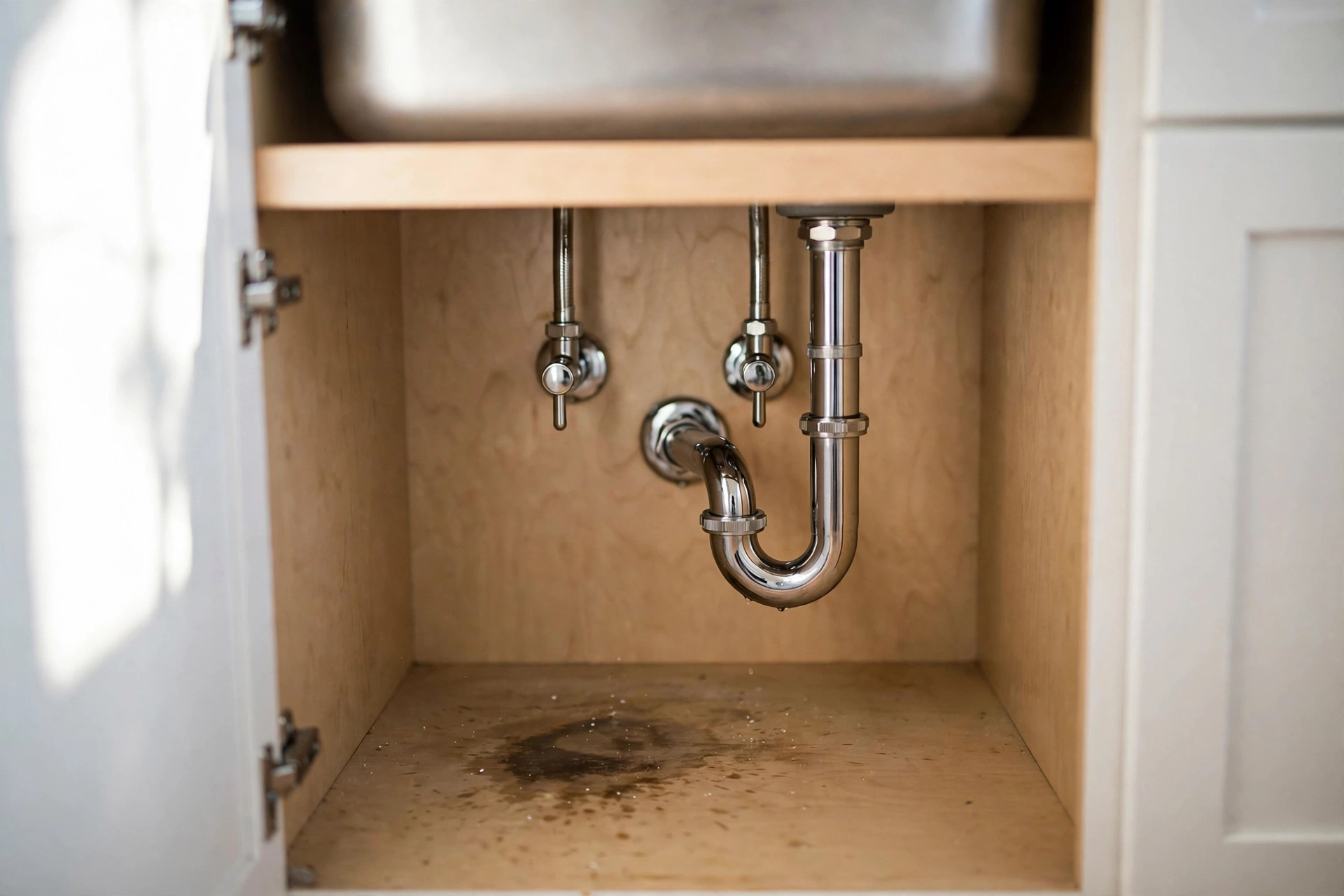
A leak under the kitchen sink is the single most common call we get in this category — a slow drip from a supply connection can soak a cabinet base for months before anyone notices.
Signs of a Bathroom Water Leak
- Loose, hollow-sounding, or stained floor tiles around the tub or shower
- A toilet that rocks, or water pooling at the toilet base
- Paint bubbling on the bathroom ceiling or the ceiling of the room below
- Persistent musty odor even after cleaning
- Grout that stays dark or crumbles around the shower
- Mildew returning in the same spot no matter how often you scrub it
A leak behind the bathroom wall — from a shower valve or tub drain — often shows up first as a stain on the ceiling below or a soft spot in drywall. In Florida humidity, that trapped moisture can start growing mold within days, so speed matters.
What Causes These Leaks
- Failed shower pan or liner — the waterproof membrane under your shower tile cracks or was never installed correctly
- Worn toilet wax ring or flange — lets water seep at the toilet base with every flush
- Corroded supply lines and valves — South Florida’s hard, mineral-heavy water eats at connections over time
- Failed caulk and grout — lets shower water migrate behind tile and into wall cavities
- Loose drain connections — slip-joint fittings under sinks work themselves loose over years of vibration
- Dishwasher and refrigerator lines — thin supply lines that burst or seep where they connect
How We Find a Hidden Kitchen or Bathroom Leak
Guessing means opening walls. We don’t guess. Bathroom water leak detection in West Palm Beach homes typically combines:
- Thermal imaging — pinpoints temperature differences from moisture behind tile, drywall, and cabinetry
- Acoustic listening — hears pressurized supply-line leaks inside walls that no eye can see
- Moisture meters — maps exactly how far water has traveled through subfloor and wall cavities
- Shower pan flood testing — confirms or rules out pan failure without removing a single tile
You get a precise location and a moisture map showing the full extent — which is also exactly what your insurance adjuster wants to see. (Our guide on whether homeowners insurance covers leak detection in Florida explains how that documentation supports a claim.)
How Much Does Leak Detection Cost in West Palm Beach?
There’s no honest flat rate without seeing the situation — a single under-sink check and a whole-bathroom moisture survey are different jobs. What determines the cost:
- How many rooms or fixtures need testing
- Whether the leak is a supply line (pressurized) or a drain/seepage issue
- How much moisture mapping and documentation you need (insurance claims need more)
If you’re comparing options for affordable kitchen leak detection in West Palm Beach, the cheapest visit isn’t the one with the lowest fee — it’s the one that pinpoints the leak on the first trip, so you’re not paying a plumber for exploratory demolition afterward. Call us and describe what you’re seeing; we’ll tell you honestly whether professional locating is the right next step.
When to Call a Professional Instead of a Plumber
Call a plumber when you can see the problem — a dripping faucet, a running toilet, a visibly cracked supply line. Call a leak detection specialist when:
- You have signs of a leak but can’t find the source
- The suspected leak is behind tile, inside a wall, or under flooring
- A plumber already looked and couldn’t locate it
- You need documented evidence for an insurance claim
A plumber’s job is to fix a known leak. Ours is to find an unknown one. Getting the location pinpointed first means the repair — by us or your plumber — is one targeted fix instead of a fishing expedition. Here’s how professional leak detection works, step by step.
If your leak signs point under the concrete slab instead — warm floors, the sound of running water beneath you — that’s a different specialty: see our slab leak detection page and the 7 warning signs of a slab leak.
Preventing the Next One
- Re-caulk tub, shower, and sink edges every couple of years — failed caulk is Florida’s #1 shower-leak starter
- Replace rubber supply lines with braided stainless steel
- Don’t ignore a rocking toilet — the wax ring is already failing
- Run the exhaust fan during and after showers to fight humidity-driven mold
- If you leave the house vacant (snowbird season), shut the main water valve — a slow leak with nobody home is how small problems become insurance claims
A hidden kitchen or bathroom leak only gets more expensive the longer it runs — especially in Florida, where trapped moisture turns into mold fast. If you’re seeing the signs, get professional bathroom leak detection in West Palm Beach before the damage spreads. Call (728) 224-6444 or schedule your inspection today, and we’ll pinpoint the source without tearing your home apart.
Frequently asked questions
How do I know if I have a hidden bathroom plumbing leak?
The classic signs are loose or stained tiles, a musty smell that won’t go away, bubbling paint, a toilet that rocks or leaks at its base, and mildew that keeps returning in the same spot. If you notice any of these, a moisture meter and thermal imaging can confirm it without opening the wall.
Can you find a leak behind tile without removing it?
Yes. Thermal imaging shows the temperature signature of moisture behind tile and drywall, and acoustic sensors pick up pressurized pipe leaks inside walls. Shower pan flood testing can confirm pan failure with the tile fully intact.
Is a kitchen cabinet water leak covered by homeowners insurance?
It depends on whether the leak was sudden and accidental versus gradual. A burst dishwasher supply line is typically covered; a cabinet that’s been slowly seeping for months usually isn’t. Dated professional documentation — thermal images, moisture readings, a written timeline — is what gets the detection and tear-out costs approved.
Should I call a plumber or a leak detection company for a hidden kitchen plumbing leak?
If you can’t see the source, call a leak detection company first. Plumbers fix known problems; when the leak is hidden behind cabinets or inside walls, you need locating equipment to pinpoint it before anyone starts cutting. Once the location is confirmed, any plumber can do the repair.